
The Brainstorm Series: Blog 2 of 13
“He was such a sweet boy.”
A father said this to me recently, scrolling through photos on his phone. Birthday parties. Family vacations. His son grinning with a gap-toothed smile, arms wrapped around his neck.
“Look at this,” he said, showing me a photo from maybe five years ago. “He used to run to me when I came home from work. Now? I am lucky if he looks up from his phone.”
He put the phone down.
“I keep waiting for my son to come back. But I am starting to wonder if he ever will.”
· · ·
A mother echoed something similar last month:
“My daughter and I were best friends. She told me everything ~ her crushes, her fights with friends, her dreams. Now she comes home, goes straight to her room, and treats every question like an interrogation.”
She paused.
“Sometimes I catch glimpses of her ~ the girl I knew, but mostly, I feel like I’m living with a stranger who happens to have my daughter’s face.”
· · ·
If you have ever thought or said out loud ~“I don’t even recognize my child anymore,” I want you to know two things:
First: You are not alone. This is perhaps the most common thing parents of teenagers say to me.
Second: What if not recognizing them is actually… the point?
What if the child you knew needed to disappear ~ so the adult they are becoming could emerge?
I know that sounds strange. Maybe even painful. So let me explain.
But first, we need to clear away some lies you’ve been told about teenagers. Because these myths aren’t just wrong—they’re making your job as a parent harder than it needs to be.

The Three Lies About Teenagers
In the first blog of this series, we explored the developmental map that psychologists like Erikson, Piaget, and Bandura drew decades ago ~ the map that shows us adolescence is a stage with specific tasks and challenges.
Today, we’re going to challenge three lies that keep parents stuck in fear, frustration, and disconnection.
These myths are everywhere. You’ve heard them from relatives, read them in articles, maybe even said them yourself. They sound like common sense.
But science has debunked every single one.
· · ·
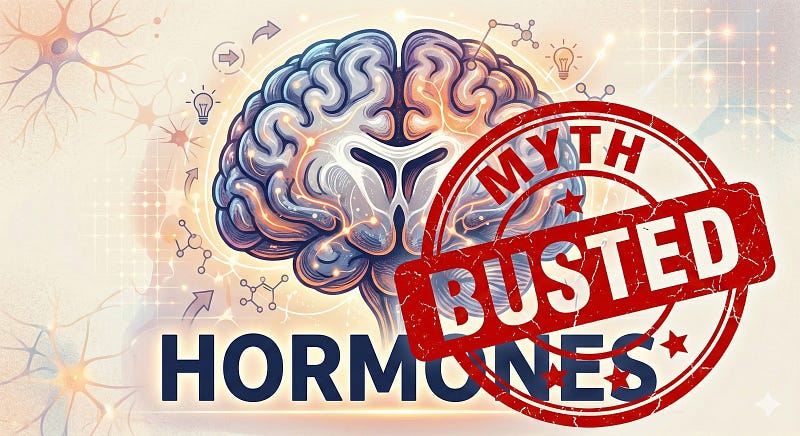
Myth #1: “It’s Just Raging Hormones”
This is the most popular explanation for teenage behavior.
Your daughter bursts into tears over something small? Hormones. Your son is moody and irritable for days? Hormones. They overreact to everything? Hormones, hormones, hormones.
It sounds scientific. It lets everyone off the hook. And it’s mostly wrong.
· · ·
Yes, hormones increase during puberty. That’s biology. But here’s what Dr. Daniel Siegel, one of the world’s leading experts on the adolescent brain, says:
Hormones are not the primary driver of teenage behavior. Brain development is.
The changes you are seeing in your teenager ~ the emotional intensity, the risk-taking, the social obsession, the questioning of everything ~ these are primarily caused by massive structural changes happening inside the brain, not hormonal fluctuations.
· · ·
Why This Myth Is So Damaging
When we blame hormones, we dismiss the teenager.
We say, essentially: “You are not really feeling what you are feeling. It’s just chemicals. Wait it out.”
I have seen this play out countless times:
Scenario 1: A 14-year-old girl is devastated because her best friend didn’t include her in a weekend plan. She’s crying, she feels betrayed, and the world feels like it’s ending. Her mother says, “It’s just your hormones making you emotional. It’s not that big a deal.”
The girl hears: My feelings don’t matter. I am being irrational. I can’t trust my own experience.
Scenario 2: A 15-year-old boy has been snapping at everyone for days. He seems angry about everything. His father says, “These teenage hormones are making you impossible. Go cool off.”
The boy hears: Something is wrong with me. My anger is a problem to be fixed. No one wants to understand what I am actually going through.
Scenario 3: A 16-year-old is anxious about exams, friendships, the future ~ almost everything feels overwhelming. The parents tell relatives, “You know how it is. Hormonal phase. It’ll pass.”
The teenager hears: I am just a walking chemical reaction. My struggles aren’t real. Just wait it out.
· · ·
In all three cases, the parent meant well. But the teenager felt dismissed, unseen, and alone.
What if their emotions are real? What if their intensity has a purpose? What if their brain is doing exactly what it’s supposed to do, and we’re the ones who don’t understand?
· · ·
The Cultural Layer: “Don’t Be So Dramatic”
In Indian families, there’s often an additional layer.
We’re taught to manage emotions, not express them. The message ~ spoken or unspoken, is: Don’t be too much. Don’t make a scene. What will people think?
So when a teenager has big emotions, the impulse is to minimize:
- “Why are you getting so worked up?”
- “Control yourself.”
- “You are being dramatic.”
And then we blame hormones as the explanation.
But here is the thing: Emotional intensity during adolescence isn’t a bug. It’s a feature.
The teenage brain is designed to feel things deeply. This emotional spark ~ as Dr. Siegel calls it, is what gives adolescents their passion, their drive, their willingness to fight for what they believe in.
The goal isn’t to suppress it. It’s to understand it and help them channel it.
· · ·
What This Means for You
Instead of: “You’re overreacting. It’s probably just your hormones.”
Try: “This seems to really be affecting you. I am here. Tell me what’s going on.”
Instead of: “Don’t be so dramatic.”
Try: “Your feelings are big right now. That makes sense. I am listening.”
Instead of: “It’s just a phase. You’ll grow out of it.”
Try: “What you are going through is real. How can I support you?”
One response dismisses. The other connects.
Your teenager can feel the difference. Trust me.
· · ·
Myth #2: “They are Just Immature ~ They Need to Grow Up.”
I hear this constantly:
“He needs to stop being so childish.” “When will she start acting her age?” “They are so immature. They just need to grow up.”
Relatives love this one: “In our days, we were already responsible at this age. What’s wrong with kids today?”
Here is the uncomfortable truth: Your teenager IS acting their age.
The behaviors that look like immaturity, impulsiveness, emotional flooding, poor decisions, and dramatic reactions aren’t signs that something is wrong.
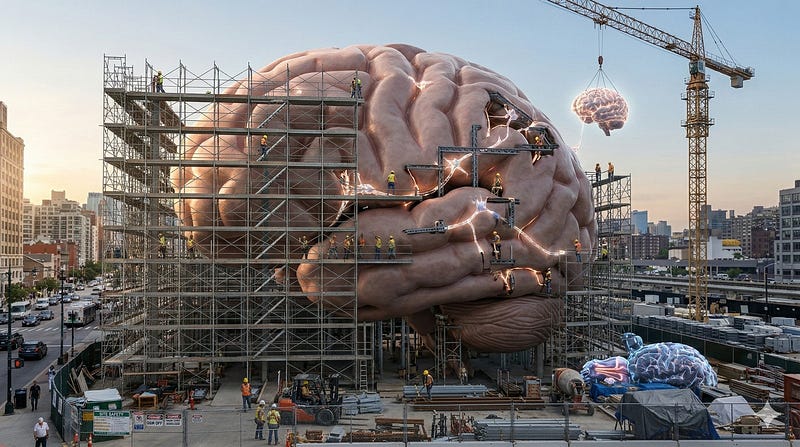
They are signs that the brain is under construction.
· · ·
The House That’s Being Built
Think about it this way:
If you walked past a building covered in scaffolding, with construction workers everywhere and dust in the air, you wouldn’t say: “What a terrible building. Why isn’t it finished?”
You’d recognize it’s being built.
Your teenager’s brain is that building.
The prefrontal cortex ~ the part responsible for planning, impulse control, considering consequences, and regulating emotions, is literally the last part of the brain to fully develop. It won’t be complete until their mid-twenties.
Yes. Mid-twenties.
So when your teenager does something, and you think, “What were they thinking?!”
The honest answer is: They weren’t. Not fully. Because the part of the brain that does that kind of thinking isn’t finished yet.
· · ·
What “Immaturity” Actually Looks Like
Let me show you what this incomplete brain looks like in real life:
Scenario 1: Your daughter promises to study for her exam, but instead spends three hours texting friends. You’re furious: “You knew this was important! Why didn’t you just DO it?”
What’s happening in her brain: The limbic system (emotional, social brain) is highly active and seeking connection. The prefrontal cortex (planning, future-thinking) isn’t strong enough yet to override that pull. She wasn’t being irresponsible ~ her brain prioritized what it’s wired to prioritize at this age: social connection.
Scenario 2: Your son says something hurtful in anger and then, an hour later, seems completely fine ~ as if nothing happened. You’re still reeling, and he doesn’t understand why.
What’s happening in his brain: Emotional regulation is still developing. The intensity comes fast, and it leaves fast. He genuinely may not have access to how big that moment was for you, because his brain has already moved on. This isn’t callousness ~ it’s neurological.
Scenario 3: Your teenager makes a risky choice ~ sneaking out, trying something dangerous, lying about where they were. You think: “They KNEW better.”
What’s happening in their brain: The reward system is on overdrive during adolescence. The thrill, the novelty, the peer approval ~ these light up the brain more intensely than at any other life stage. The prefrontal cortex that would normally say “wait, think about consequences” is simply outvoted.
· · ·
This Isn’t an Excuse ~ It’s an Invitation for Compassion
I want to be very clear: Understanding the brain doesn’t mean accepting all behavior.
Teenagers still need boundaries. They still need guidance. They still need consequences when they make harmful choices.
But HOW we deliver those boundaries matters.
If we approach them with: “What’s wrong with you? Why can’t you just grow up?” ~ we shame them for something they cannot fully control.
If we approach them with: “I understand your brain is still developing. AND this behavior isn’t okay. Let’s figure this out together.” ~ we hold them accountable while preserving the relationship.
The relationship is what will guide them through. Not our lectures. The relationship.
· · ·
What This Means for You
Adjust your expectations ~ not downward, but realistically.
Your teenager is not a short adult. They’re a person whose brain is still developing capacities that you take for granted.
When they mess up (and they will), ask yourself:
“Is this willful defiance? Or is this a still-developing brain doing the best it can?”
Often, it’s the latter. And that changes how you respond.
Instead of: “What were you thinking?!”
Try: “Walk me through what happened. What was going through your mind?”
Instead of: “You should know better by now.”
Try: “This is hard. Your brain is still learning how to do this. Let’s work on it together.”
Instead of: “Grow up already.”
Try: “I know this is frustrating for both of us. I’m not giving up on you.”
· · ·
Myth #3: “They Need to Become Independent From Us”
This one sounds not just true, but aspirational.
“Our job is to raise independent children.” “They need to learn to stand on their own.” “They shouldn’t need us so much anymore.”
In Indian families, there’s often a confusing double message:
On one hand: “Be independent! Take responsibility! Grow up!” On the other hand: “Listen to us. We know what’s best. Don’t question.”
No wonder teenagers are confused.
But here’s the deeper problem with the “independence” goal:
Complete independence isn’t the goal. Interdependence is.
· · ·
Independence vs. Interdependence
What’s the difference?
Independence says: “I don’t need anyone. I can handle life alone.”
Interdependence says: “I’m a capable person who also knows how to receive support and give it to others.”
The first creates isolation. The second creates healthy relationships.
· · ·
Think about the adults you admire. The ones who navigate life well.
Are they completely independent ~ needing no one, never asking for help, doing everything alone?
Or are they interdependent ~ capable and self-reliant, but also connected, collaborative, able to lean on others when needed?
The healthiest adults are interdependent. And that’s what adolescence is preparing your child for.
· · ·
The Push-Pull That Confuses Everyone
Here is what makes this so painful:
Your teenager IS pulling away. They ARE seeking independence. They DO want space from you.
AND they still need you. Desperately.
This isn’t a contradiction. This is the developmental task.
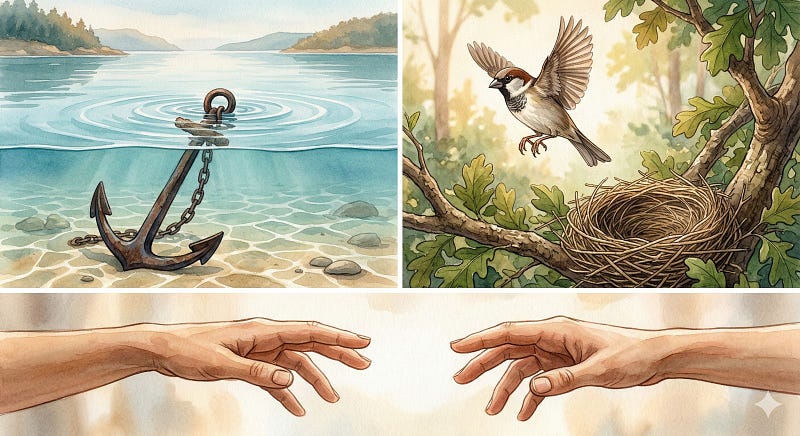
John Bowlby, the father of attachment theory, described it beautifully: Adolescents need TWO things from parents:
- A safe harbor ~ A place to return when the world gets stormy, when they are hurt or scared or overwhelmed
- A launching pad ~ The confidence and permission to go out, explore, take risks, and become their own person
They need BOTH. And they need them from YOU.
· · ·
What the Push-Away Actually Means
When your teenager:
- Chooses friends over family time
- Stops telling you everything
- Gets annoyed by your questions
- Wants to be left alone
- Criticizes you or your values
It can feel like rejection. It can feel like: They don’t need me anymore. They don’t even like me.
But here is what’s actually happening:
They are practicing leaving.
They are building the psychological muscles they’ll need to eventually leave your home and build their own life. And the only way to build those muscles is to push against something solid.
That something is you.
The pushing doesn’t mean they don’t need you. It means they trust you enough to push and expect you to stay.
· · ·
A Story from BECOMING
At our BECOMING retreat for teenagers, we create space for teens to explore identity and independence ~ away from parents, surrounded by peers.
On the last night of a recent retreat, a 16-year-old girl said something that stayed with me:
“At home, I feel like I have to fight for space. Like everything I want to do, I have to defend. But being here, I realized something: I am not actually trying to get away from my parents. I am trying to find out who I am. And I can’t do that if they are always right there.”
She paused.
“But I also realized… I want them to be there when I come back.”
This is the paradox. The beautiful, painful paradox.
They need to go. And they need you to stay.
· · ·
What This Means for You
When your teenager pushes you away, don’t disappear.
Stay present. Stay available. Stay warm even when they’re cold.
The message to communicate (through actions more than words):
“You can go. You can explore. You can even be angry at me. But I am not going anywhere. I’ll be here when you need me.”
Instead of: “Fine, figure it out yourself.”
Try: “I am giving you space. But I am still here when you want to talk.”
Instead of: “You don’t need me anymore anyway.”
Try: “I know you are growing up. I am still your person, whenever you need me.”
Instead of: “Call me when you are ready to be part of this family again.”
Try: “Take your time. I’ll be here.”
This is the gift of secure attachment: Freedom to leave, certainty that you can return.

· · ·
So Why Don’t You Recognize Them?
Let’s come back to where we started.
“I don’t recognize my child anymore.”
Now you know what’s actually happening:
- Their brain is under massive renovation ~ so they think, feel, and act differently than the child you knew
- They are building an identity ~ which requires questioning everything you taught them and experimenting with who they might become
- They are shifting their attention to peers ~ because that’s how they learn to navigate the world beyond your home
- They are practicing independence ~ while still needing your presence as an anchor
· · ·
Here is the reframe I want to offer you:
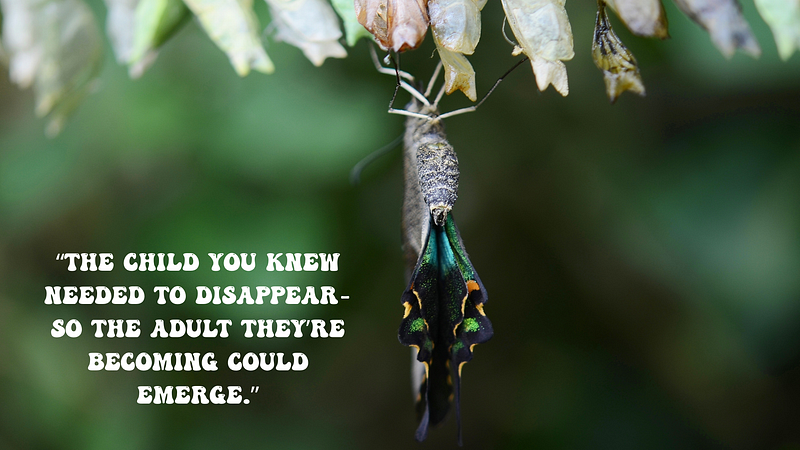
The child you knew needed to disappear ~ so the adult they are becoming could emerge.
This is not loss. This is transformation.
The caterpillar doesn’t just grow wings. It dissolves completely inside the cocoon before becoming the butterfly. That dissolution looks like destruction. But it’s actually creation.
Your teenager is in the cocoon.
And if you can stay present through the chaos, stay connected through the conflict, and resist the urge to either control them or abandon them…
You’ll get to meet someone remarkable on the other side: The adult your child is becoming.
They’ll still have your eyes. Your laugh. Traces of that gap-toothed kid who ran into your arms.
But they’ll also be someone new. Someone who chose their own values, found their own path, and if you do this right, still wants you in their life.
That’s the goal. Not to keep them as they were, but to be there as they become.
· · ·
Five Things You Can Do This Week
1. Catch yourself believing the myths
This week, notice when you think or say:
- “It’s just hormones”
- “They need to grow up”
- “They don’t need me anymore”
When you catch it, pause. Remind yourself: “That’s the myth. What’s actually true?”
· · ·
2. Validate one emotion without fixing it
The next time your teenager expresses frustration, anger, or sadness ~ resist the urge to solve, dismiss, or minimize.
Instead, say: “That sounds really hard.”
Full stop. No advice. No “but look on the bright side.” Just acknowledgment.
Watch what happens.
· · ·
3. Reframe “immature” behavior
The next time your teenager does something that looks irresponsible or thoughtless, ask yourself:
“Is this defiance? Or is this a still-developing prefrontal cortex?”
Then respond accordingly ~ with accountability AND compassion.
· · ·
4. Give space without disappearing
If your teenager wants to be left alone, give them that space. But leave the door open ~ literally and metaphorically.
Try saying: “I’ll give you space. Come find me if you want to talk. I am here.”
· · ·
5. Tell them you are not going anywhere
Find a quiet moment and say something like:
“I know things are changing between us. That’s okay ~ it’s supposed to happen. I want you to know: even when we argue, even when you need space, I am not going anywhere. I am still your person.”
They might roll their eyes. They might grunt. They might even leave the room.
Doesn’t matter. They heard you. And somewhere inside, it landed.
· · ·
What’s Coming Next
Now that we have cleared away the myths, we are ready to explore what’s actually happening in your teenager’s brain.
In the next blog, we’ll dive into the science:
“It’s Not Hormones, It’s Architecture: Understanding the Teenage Brain”
You’ll know about pruning, myelination, and the prefrontal cortex ~ in plain language that actually helps you parent better.
Because once you understand the architecture, everything your teenager does starts to make sense.
· · ·
Join our WhatsApp community to get the next blog delivered directly to your phone ~ plus connect with other parents navigating the teenage years.
And if you have a teenager struggling with identity, purpose, and becoming, our BECOMING retreat is designed specifically for this developmental stage. A space where teens explore who they are through expressive arts, movement, and deep conversation ~ with trained facilitators who understand that the “problem” of adolescence is actually the portal to growth.
· · ·
Preeti Toraskar is the founder of Young SoulTales, where children’s emotional development is the curriculum. She’s currently completing her Master’s in Expressive Movement Therapy, has trained with Dr. Daniel Siegel, and is the mother of a 14-year-old Aarya
