
Whole-Brain Strategy #12: Connect Through Conflict
We’ve reached the final strategy.
And it’s the one that might matter most for your child’s future relationships: romantic partnerships, friendships, colleagues, their own children someday.
Conflict is inevitable. Disconnection isn’t.
Every relationship has disagreements. Arguments. Moments of frustration, anger, hurt. The question isn’t whether your child will experience conflict ~ it’s how they’ll handle it.
Will they learn to attack? To withdraw? To suppress their needs? To win at all costs?
Or will they learn something harder and more valuable: how to fight while staying connected. How to disagree without destroying. How to hold onto “we” even when “I” is hurting.
That’s what “Connect Through Conflict” teaches.
· · ·
The Problem With How Most of Us Learned
Think about the conflicts you witnessed growing up.
Maybe your parents fought loudly, explosively and you learned that conflict means chaos, loss of control, things you can’t take back.
Maybe your parents never fought at all and you learned that conflict is dangerous, to be avoided at all costs. Disagreement went underground, unspoken but felt.
Maybe one parent dominated and the other submitted and you learned that conflict has winners and losers, and it’s better to win.
Most of us didn’t see healthy conflict modeled. We saw some version of:
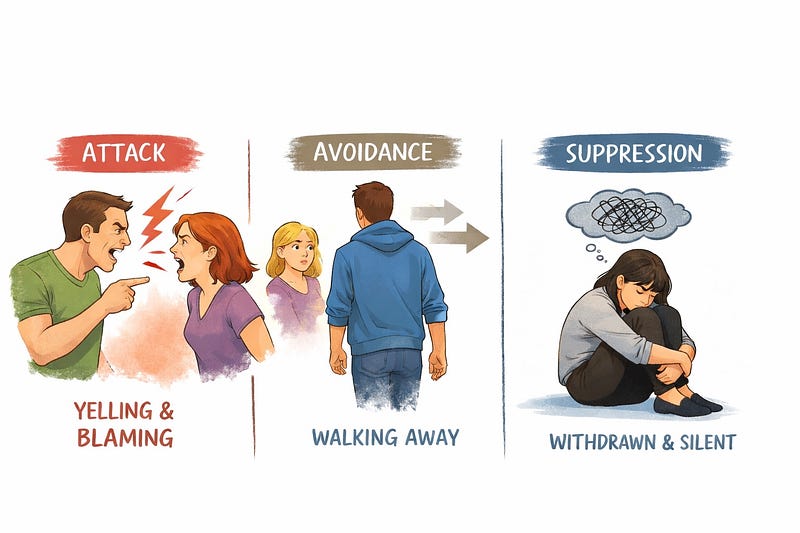
- Attack: Yelling, blaming, criticizing, contempt
- Avoidance: Silence, withdrawal, pretending everything is fine
- Suppression: One person always giving in, swallowing their needs
None of these teach children how to stay connected during disagreement.
And here’s what the research shows:
The ability to navigate conflict while maintaining connection is one of the strongest predictors of relationship success ~ in childhood friendships, adult partnerships, and family bonds.
This is learnable. And it starts at home.
· · ·
What “Connect Through Conflict” Actually Means
Dr. Siegel and Dr. Tina Payne Bryson describe this strategy as learning to fight with a “we” in mind.
It doesn’t mean:
- Avoiding all conflict
- Never getting angry
- Always compromising
- Letting others walk over you
It means:
- Remembering the relationship matters, even when you’re upset
- Seeing the other person’s perspective, even when you disagree
- Expressing your needs without attacking
- Listening even when you want to defend
- Repairing when things go wrong
The key insight: conflict doesn’t have to mean disconnection.
Two people can disagree ~ even intensely ~ while still holding onto the fact that they’re on the same team. That the relationship will survive this. That the goal isn’t to win, but to understand and be understood.
This is incredibly hard. Most adults struggle with it. But children can begin learning it early, and every bit of practice builds the neural pathways for healthy relationships later.
· · ·
The Indian Family Challenge
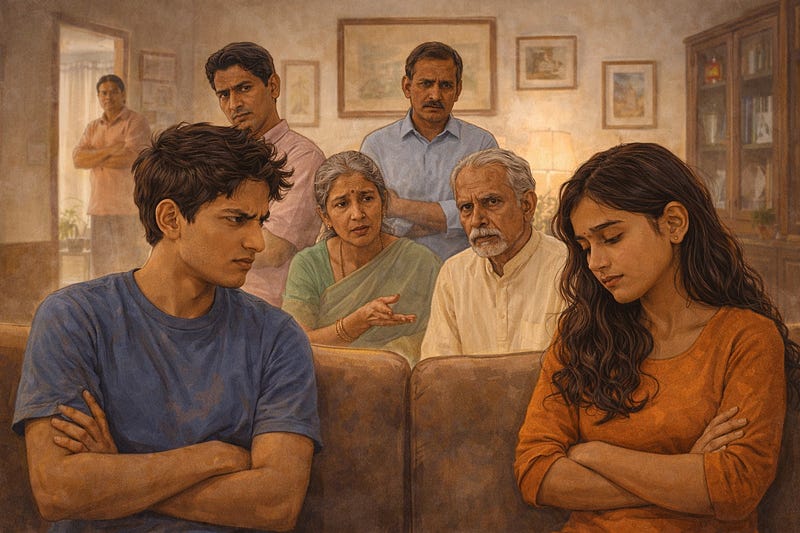
In many Indian families, there’s a particular challenge around conflict:
Respect for elders often means suppressing disagreement.
Children learn early: you don’t argue with parents. You don’t question teachers. You don’t challenge authority. Disagreement is disrespectful.
This creates adults who either:
- Can’t express their needs in relationships (they learned to suppress)
- Explode when they finally do disagree (suppression eventually breaks)
- Struggle with equal partnerships (they only know hierarchy)
There’s also the cultural emphasis on family harmony ~“log kya kahenge” (what will people say) which can mean conflict is hidden rather than resolved. We perform peace while resentment builds underneath.
But here’s what I’ve come to believe:
True respect includes the ability to disagree respectfully. True harmony isn’t the absence of conflict but it’s the presence of repair.
We can teach our children to honour relationships AND express their authentic needs. To respect others AND advocate for themselves. To maintain connection AND be honest about their feelings.
This is the both/and that Indian families need.
· · ·
Teaching the “We” in Conflict
Here’s how to help children learn to connect through conflict:
1. Model It (This Is Everything)
Children learn more from watching you fight than from anything you tell them.
If they see you and your partner (or you and their other parent, or you and your own parents) handle conflict with attacks and withdrawals, that’s what they’ll learn.
If they see you disagree while staying respectful… take breaks when things get heated… come back and repair… apologize when you’re wrong… that’s what they’ll learn.
You don’t have to be perfect. In fact, imperfect conflict that leads to repair might be MORE valuable than no conflict at all. Children learn: ruptures happen, and they can be healed.
2. Teach the Difference Between Feelings and Actions
This is crucial:
All feelings are okay. Not all actions are okay.
You can feel furious at your sibling. You cannot hit them. You can feel hurt by your friend. You cannot spread rumours about them. You can feel frustrated with your parent. You cannot scream insults at them.
This distinction helps children understand: your anger is valid. The way you expressed it wasn’t. Let’s find another way.
3. Use “I” Statements
Teach children to express feelings without attacking:
Instead of: “You’re so mean! You always take my stuff!” Try: “I feel angry when you take my things without asking.”
Instead of: “You never listen to me!” Try: “I feel unheard right now. Can you look at me while I talk?”
“I” statements keep the focus on the speaker’s experience rather than blaming the other person. They’re less likely to trigger defensiveness.
This takes practice. Lots of practice. Don’t expect perfection ~ model it yourself and gently coach.
4. Teach Perspective-Taking
In the heat of conflict, we lose sight of the other person’s experience. We’re fully in our own pain.
Help children practice seeing the other side:
“I know you’re upset with Riya. I wonder what Riya might be feeling right now?”
“You wanted the toy and Arjun wouldn’t share. What do you think Arjun was feeling?”
“Let’s imagine you’re Meera for a moment. Why might she have said that?”
This doesn’t mean the child has to agree with the other person or give up their own needs. It means they can hold both perspectives ~ theirs AND the other’s. That’s the “we.”
5. Emphasise Repair
Here’s what many families miss:
The repair after conflict matters more than the conflict itself.
Every relationship has ruptures. The question is: do we heal them?
Teach children that after conflict comes repair:
- Acknowledging what happened
- Apologizing for any harm caused (real apologies, not “I’m sorry you feel that way”)
- Reconnecting
And model this yourself. When you mess up with your child ~ lose your temper, say something harsh, react unfairly ~ repair it. “I’m sorry I yelled earlier. That wasn’t okay. I was frustrated, but I shouldn’t have spoken to you that way. Are you okay?”
This teaches something profound: relationships can survive ruptures. Mistakes don’t mean disconnection. We can always come back to “we.”
· · ·
Age-Specific Approaches
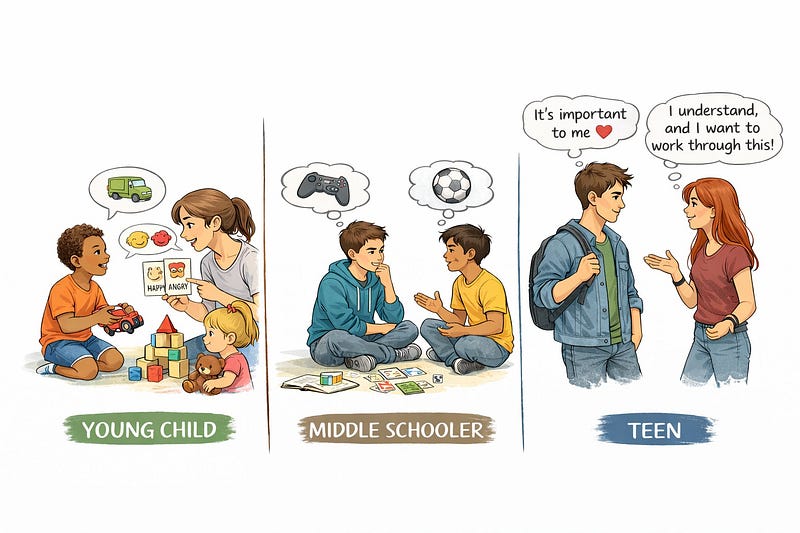
Young Children (5–8 years)
At this age, conflicts are often physical (grabbing, hitting) and immediate (toys, turns).
Focus on:
- Words instead of actions: “Use your words to tell her how you feel”
- Simple “I” statements: “Say ‘I don’t like it when you take my toy’”
- Turn-taking and sharing basics
- Naming the other child’s feelings: “Look at his face. How do you think he feels?”
- Quick repair: “Can you check if she’s okay?”
Don’t expect sophistication. You’re planting seeds.
Middle Childhood (8–12 years)
Conflicts become more complex ~ friendship drama, fairness disputes, sibling rivalry intensifies.
Focus on:
- Perspective-taking exercises
- Problem-solving together: “What’s a solution that works for both of you?”
- Teaching that conflict isn’t bad ~ it’s normal
- Multiple feelings at once: “You can love your brother AND be angry at him”
- Bigger repair conversations after things cool down
This is a great age to explicitly teach the concept: “We can disagree AND stay connected.”
Teenagers (13–17 years)
Teen conflicts are often about autonomy, identity, and complex social dynamics.
Focus on:
- Respecting their need for independence while staying connected
- Listening more than lecturing during disagreements
- Modeling how to disagree respectfully (they’re watching even when they seem not to)
- Discussing relationship patterns: “What kind of person do you want to be in conflict?”
- Supporting them through friendship and romantic relationship challenges
With Aarya, I’ve learned that my job isn’t to solve her conflicts anymore. It’s to help her think through them. “What do you want the outcome to be? What’s important to you in this friendship? How might she be seeing it?” She’s building her own conflict capacity and that’s the goal.
· · ·
What We Do at Young SoulTales
At our retreats, conflict isn’t something we avoid but it’s something we expect and work with.
When you put 20+ children together for multiple days, conflict is guaranteed. Someone feels left out. Someone says something hurtful. Someone takes something that wasn’t theirs. Two children want the same thing.
We see these as learning opportunities, not problems.
At Roots & Wings (our camps for ages 6–11), we have what we call “talking circles” when conflicts arise. Both children share their experience ~ uninterrupted. Then each reflects back what they heard the other say. Then we problem-solve together.
It’s slow. It would be faster for a facilitator to just announce a solution. But the children are learning something faster can’t teach: how to stay in connection while working through difficulty.
At BECOMING (our retreats for teenagers), we go deeper. We explore personal patterns around conflict:
- “How does your family handle disagreement? What did you learn?”
- “When conflict happens, do you tend to attack, avoid, or suppress?”
- “What would it look like to stay connected even when you’re upset?”
I remember one BECOMING retreat where two girls had ongoing tension. Nothing explosive ~ just coldness, eye rolls, subtle exclusions. The kind of conflict girls often specialize in.
On Day 2, we created space for them to actually talk. Not mediated by adults, but supported. They sat facing each other. Each spoke about how she’d felt. Each listened.
What emerged: both felt judged by the other. Both felt they had to perform a certain version of themselves. Both wanted to be seen for who they really were.
They weren’t friends by the end of the retreat. But they understood each other. The coldness thawed. They’d practiced something most adults never do: staying present with someone you have conflict with, without attacking or withdrawing.
That’s the skill we’re building.
· · ·
The Lifelong Gift
Here’s why this strategy matters beyond childhood:
How your child handles conflict will shape every significant relationship they have.
Their future partnerships. Their friendships. Their professional relationships. How they parent their own children someday.
If they learn that conflict means disconnection, they’ll either avoid it (and lose their voice) or engage destructively (and damage their relationships).
If they learn that conflict can happen within connection ~ that you can disagree, even fight, while holding onto “we” ~ they have a foundation for healthy relationships for life.
This is perhaps the most important social-emotional skill we can teach.
· · ·
This Works for Us Too
How do YOU handle conflict?
Not how you think you should handle it. How you actually do.
When someone disagrees with you, do you get defensive? Attack? Withdraw? Give in?
When you’re hurt by someone you love, can you express it without blaming? Can you listen to their perspective even when you’re in pain?
Most of us have patterns we learned in childhood ~ and they’re not always serving us.
Try this:
The next time you’re in conflict with someone you care about, try holding one thought: “We’re on the same team.”
Not “I need to win this.” Not “I need to prove I’m right.” Not “They need to understand how much they hurt me.”
Just: “We’re on the same team. How do we get through this together?”
This doesn’t mean you give up your needs. It means you pursue them while remembering the relationship matters too.
And when your children see you do this ~ struggle, stay connected, repair ~ you’re teaching them more than words ever could.
· · ·
The Series Comes to a Close
We’ve traveled through 12 strategies together:
- Connect and Redirect ~ Meeting emotions before addressing behaviour
- Name It to Tame It ~ Using words to calm the brain
- Engage, Don’t Enrage ~ Keeping the thinking brain online
- Use It or Lose It ~ Exercising the decision-making brain
- Move It or Lose It ~ Using physical movement to shift emotional states
- Use the Remote of the Mind ~ Replaying difficult memories safely
- Remember to Remember ~ Building identity through recollection
- Increase the Family Fun Factor ~ Why play builds resilience
- Let the Clouds Roll By ~ Teaching that emotions are temporary
- SIFT ~ A flashlight for the inner world
- Exercise Mindsight ~ Finding the way back to calm
- Connect Through Conflict ~ Staying “we” even when it’s hard
At the heart of all these strategies is one idea:
Integration.
Connecting the different parts of the brain. Connecting past and present. Connecting self and other. Connecting what we feel with what we understand.
An integrated child becomes an integrated adult ~ someone who can navigate life’s challenges with flexibility, resilience, and connection.
This is what we mean by “the missing education.” Not more facts to memorize. Not more skills to perform. But the deep work of knowing yourself, regulating yourself, and connecting with others.
Thank you for taking this journey with us. Every time you use one of these strategies with your child, you’re building their brain. You’re shaping their future relationships. You’re giving them something school never will.
That’s no small thing.
· · ·
What’s Next
This may be the end of our 12-strategy series, but it’s not the end of the conversation.
Stay connected with Young SoulTales:
👉 Join the Young SoulTales Parent’s Circle on WhatsApp ~ We share tools, stories from our retreats, and practical parenting insights every week. This is where the conversation continues.
👉 Explore our retreats ~ If you want your child to experience these strategies in action—through movement, nature, art, and community—our Roots & Wings camps (ages 6–11) and BECOMING retreats (ages 13–17) bring this work to life.
👉 Follow us on Instagram ~ Daily reminders that you’re not alone in this parenting journey.
And if this series has been valuable, share it with another parent who might need it. The more families who understand whole-brain parenting, the more children grow up integrated, resilient, and connected.
With gratitude,
Preeti
· · ·
Preeti Toraskar is the founder of Young SoulTales, where children’s emotional development is the curriculum. She’s currently completing her Master’s in Expressive Movement Therapy, has trained with Dr. Daniel Siegel, and is the mother of a 14-year-old who is slowly, imperfectly, beautifully learning to stay connected even when she’s furious ~ which, honestly, gives Preeti more hope than almost anything else.
· · ·
← Previous: Strategy #11 ~ Exercise Mindsight: Finding Your Way Back to Calm → Next: Coming up with new series, stay tuned!
