
Whole-Brain Strategy #8: Increase the Family Fun Factor
When life gets busy and whose life isn’t busy ~ play is usually the first thing to go.
We tell ourselves we’ll make time for it later. After the homework is done. After the chores. After we’ve caught up on everything that feels more urgent.
But here’s what I’ve learned, both as a parent and through my training in developmental psychology:
Play isn’t the reward you give after the important stuff is done. Play IS the important stuff.
Not because it keeps kids happy (though it does). Not because it gives parents a break (though sometimes it does that too).
But because positive, playful experiences literally build the brain’s capacity for resilience.
Let me explain.
· · ·
The Neuroscience of Joy
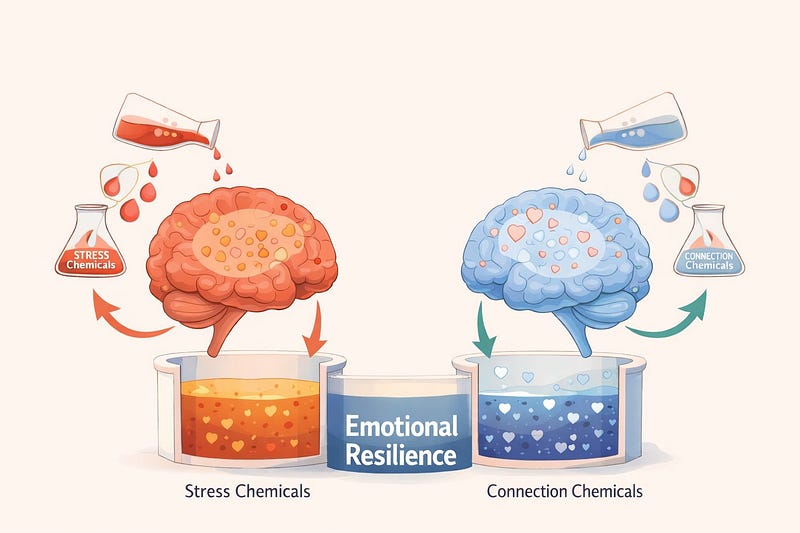
In The Whole-Brain Child, Dr. Daniel Siegel and Dr. Tina Payne Bryson introduce a powerful concept: the emotional bank account.
Every positive interaction you have with your child makes a deposit. Every negative interaction ~ conflict, disappointment, discipline ~ makes a withdrawal.
This isn’t just a metaphor. It’s neurochemistry.
When children experience joy, playfulness, and genuine connection with their caregivers, their brains release oxytocin (the bonding hormone), dopamine (the reward chemical), and endorphins (natural mood elevators). These chemicals literally strengthen neural pathways associated with:
- Feeling safe and secure
- Trusting relationships
- Emotional regulation
- Resilience under stress
When the emotional bank account is full, children can handle withdrawals. A tough day at school. A conflict with a sibling. A firm “no” from a parent. They have reserves to draw from.
When the account is empty, when life has been all homework, chores, and corrections then even small withdrawals feel catastrophic. The child has no buffer.
This is why “Increase the Family Fun Factor” is a whole-brain strategy, not a parenting luxury.
· · ·
The Myth of Quality Time
Here’s a phrase that trips parents up: “quality time.”
We’ve been told it’s not the quantity that matters, it’s the quality. So we plan elaborate outings. Special activities. Instagram-worthy moments.
And then we’re exhausted. Or the outing doesn’t go as planned. Or we’re so focused on making it “quality” that we forget to actually enjoy it.
Here’s what the research actually shows:
Frequency matters more than elaborateness.
Ten minutes of genuine, playful connection every day builds more resilience than one “special” outing per month.
It doesn’t have to be planned. It doesn’t have to cost money. It doesn’t have to be educational.
It just has to be fun. For both of you.
· · ·
What Counts as “Fun”?
This is where parents sometimes get stuck. “Fun” can feel like another item on the to-do list. Another thing to plan and execute.
So let’s simplify.
Fun is any moment where you and your child are genuinely enjoying each other’s company.
That’s it.
It might be:
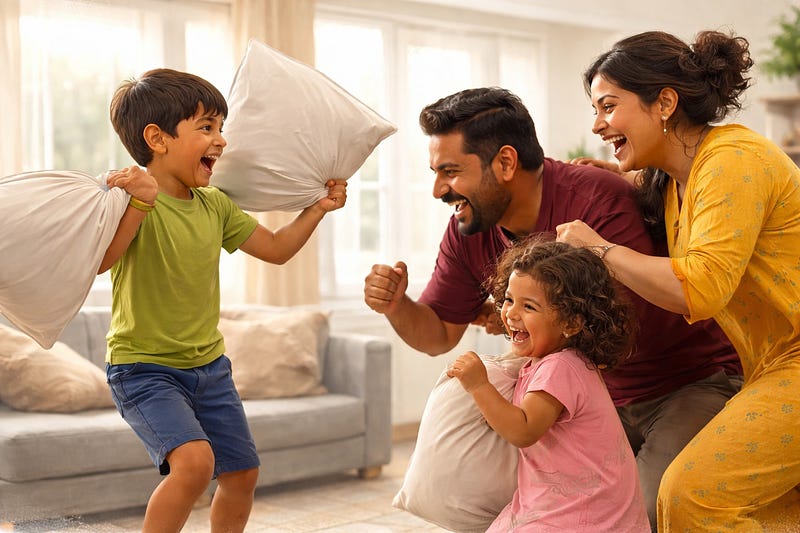
- A pillow fight that erupts spontaneously
- Singing badly together in the car
- An inside joke that makes you both laugh
- Cooking together (even if it’s just making parathas)
- Playing cards while waiting at the doctor’s office
- Dancing to a song in the living room
- A funny voice or character you do that always gets a giggle
- Watching something together and actually watching it together (not on your phone)
Notice what’s NOT on this list: expensive outings, elaborate plans, educational activities disguised as fun.
I’m not saying those things are bad. But if they’re your only definition of “family fun,” you’ll never have enough.
The goal is to weave playfulness into ordinary life.
· · ·
The Indian Parent Struggle
Let me name something I see in many Indian families, including my own growing up:
We’re very good at providing. We’re less practiced at playing.
Our parents worked incredibly hard to give us opportunities. Education was sacred. Achievement was celebrated. And many of us inherited this orientation: parenting is about preparing children for success.
Play can feel… frivolous. Unproductive. A distraction from the real work of raising capable children.
Add to this the pressure of academics, competitive entrance exams, and the anxiety about “falling behind,” and play becomes the thing we sacrifice.
But here’s the paradox:
Children who play more are better equipped to handle academic pressure.
Not because play is “secretly educational” (though it often is). But because play builds the emotional resilience needed to handle stress, failure, and challenge.
A child with a full emotional bank account can handle a bad grade, a difficult teacher, or a competitive setback. They have reserves.
A child who only knows work ~ whose relationship with their parents is primarily about performance and correction ~ has no buffer when things get hard.
· · ·
It’s Not About Being a “Fun Parent”
I want to be clear about something:
This strategy isn’t about becoming your child’s entertainer. It’s not about being the “cool parent” or saying yes to everything.
Boundaries still matter. Discipline still matters. Homework still needs to get done.
The point is balance.
If your interactions with your child are 90% corrections, reminders, and logistics (“Did you do your homework? Brush your teeth. Stop hitting your brother.”), the relationship becomes transactional. The emotional bank account drains.
If you can shift even 20% of your interactions toward genuine enjoyment and playfulness, everything changes.
The corrections land differently when they come from someone who also plays with you.
The “no” is easier to accept from someone who also says “yes” to fun.
· · ·
What We See at Young SoulTales
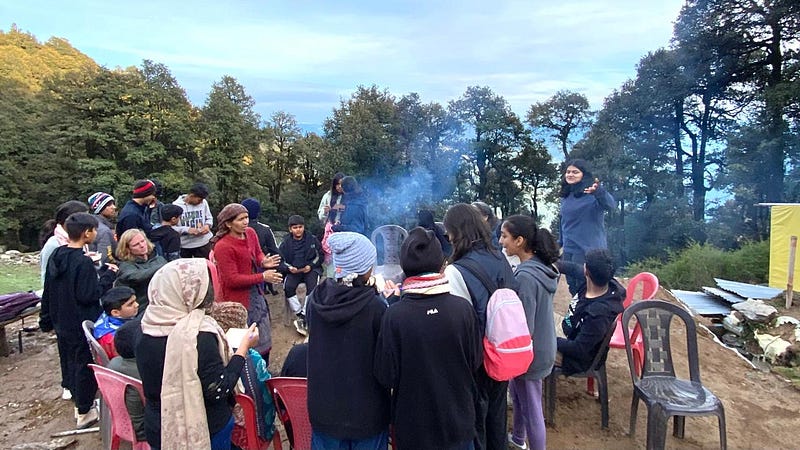
At our retreats, we build in what we call “unstructured joy” the time that has no agenda except enjoyment.
It might be a spontaneous dance party after lunch. A silly game that a child invents and everyone plays. Jokes and laughter during meals. Songs around the campfire that get increasingly ridiculous.
These moments aren’t filler between the “real” activities. They ARE the real activities.
Because here’s what we’ve noticed:
The deepest breakthroughs often happen AFTER the play.
A child who’s been guarded all day suddenly opens up after a laughing fit. A teenager who’s been performing “cool” drops the mask during a silly game. Connections form between children during unstructured play that structured activities couldn’t create.
Joy creates safety. And safety is where growth happens.
I remember one camp where we had a power cut during dinner. No lights, no planned activity possible. Some facilitators might have panicked.
Instead, someone started a story. Each person added one sentence. It got absurd. It got hilarious. Children who had barely spoken all day were contributing. By the time the lights came back, no one wanted to stop.
That “accident” became one of the most connecting moments of the entire retreat.
· · ·
Practical Ways to Increase the Fun Factor
You don’t need to overhaul your life. Start small:
1. Protect 10 minutes of daily play Not screen time together but actual interaction. A card game. A silly conversation. A quick outdoor kick-around. It doesn’t need to be long. It needs to be consistent.
2. Say yes more often Not to everything. But notice how often you say no out of habit rather than necessity. “Can we play?” “Not now, I’m busy.” What if, sometimes, you said yes?
3. Be silly Use funny voices. Make up songs. Be willing to look ridiculous. Children don’t need perfect parents. They need present, playful ones.
4. Create family rituals Weekly game night. Sunday morning pancakes. A special handshake. Rituals create anticipation and memory and both deposits in the emotional bank account.
5. Let them lead Ask your child what THEY find fun. It might not be what you’d choose. But following their lead shows that their joy matters to you.
6. Laugh at yourself When you mess up, when something goes wrong, when life is absurd ~ model that it’s okay to laugh. This teaches children that imperfection isn’t catastrophic.
· · ·
Age-Specific Notes
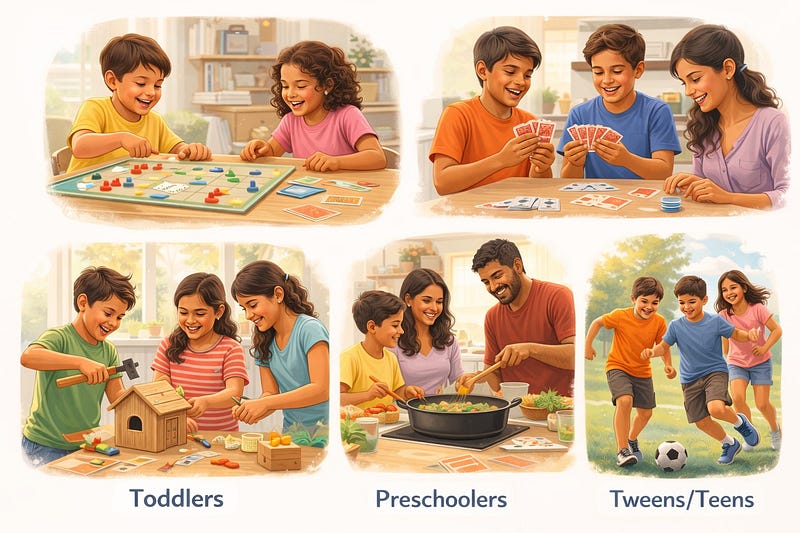
Young Children (5–9)
Physical play is huge at this age. Roughhousing, chasing, dancing, building. They also love when parents enter their imaginative worlds ~ playing pretend, voicing stuffed animals, joining their games on their terms.
Middle Schoolers (9–12)
Board games, card games, outdoor activities become important. They’re developing competence and enjoy games with rules and strategy. Shared projects (cooking something together, building something) can be connecting.
Teenagers (13–17)
Fun with teens often looks different ~ but it’s just as important. Shared media (watching shows together, playing video games together), going out for food, drives with music, inside jokes. The key is being present without being intrusive. Follow their interests even when you don’t fully understand them.
With Aarya, I’ve learned that “fun” at 14 doesn’t look like it did at 8. But when I show genuine interest in what SHE finds fun ~ her music, her shows, her jokes ~ connection happens. Even if I don’t always get the references.
· · ·
This Works for Us Too
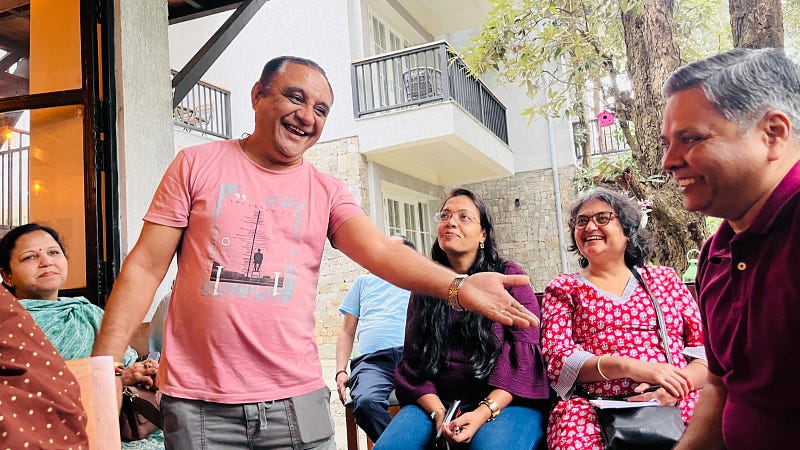
When did you last have fun? Not “relaxation” or “self-care” ~ actual, laughing, spontaneous fun?
For many of us adults, play has become something we facilitate for children rather than experience ourselves.
But our brains need it too. Joy isn’t just for kids.
Try this:
This week, do something fun that has no purpose. Not exercise disguised as fun. Not “productive” hobbies. Something that exists purely because it’s enjoyable.
Call a friend who makes you laugh. Watch something silly. Dance in your kitchen. Play a game.
When you experience joy yourself, you have more to give. And when your children see you being playful—not just facilitating their play—they learn that adulthood doesn’t mean the end of fun.
That’s a lesson worth teaching.
· · ·
What’s Next
In the next post, we’ll explore Strategy #9: Let the Clouds of Emotion Roll By ~ one of the most powerful reframes you can give your child. It’s the idea that emotions are temporary visitors, not permanent residents. That feelings ~ even the big, overwhelming ones ~ will pass.
This is especially important for children who get “stuck” in emotions, who feel like anger or sadness will last forever.
If you’re following this series on WhatsApp, you’ll get it directly on Friday.
👉 Join the Young SoulTales Parent’s Circle We share these strategies, real stories from our camps, and tools for raising emotionally intelligent children.
· · ·
Preeti Toraskar is the founder of Young SoulTales, where children’s emotional development is the curriculum. She’s currently completing her Master’s in Expressive Movement Therapy, has trained with Dr. Daniel Siegel, and is the mother of a 14-year-old who still tolerates her attempts at being funny ~ mostly.
· · ·
Previous: Strategy #7 ~ Remember to Remember: Building Memory Through Recollection → Next: Strategy #9 ~ Let the Clouds of Emotion Roll By (Coming Tuesday)
