

Whole-Brain Strategy #6: Use the Remote of the Mind
Your child comes home from school upset.
Something happened—maybe they were excluded from a game, or they said something embarrassing in class, or they had a fight with a friend.
They keep replaying it. Over and over. You can see them spiraling.
So you say what feels helpful:
“Don’t think about it.” “Just forget it happened.” “Let it go. Move on.”
Here’s the problem:
You can’t integrate what you won’t revisit.
When we tell children to “forget about it,” we’re teaching them to bury difficult experiences and not process them.
And unprocessed experiences don’t disappear.
They show up later as anxiety, shame, avoidance, or emotional reactivity that seems “out of nowhere.”
The brain needs to REVISIT difficult moments in order to make sense of them and file them away properly.
That’s what this strategy is about: Using the remote of the mind to rewind, replay, and reframe so the brain can integrate instead of getting stuck.
· · ·
What Happens When We Try to “Forget”
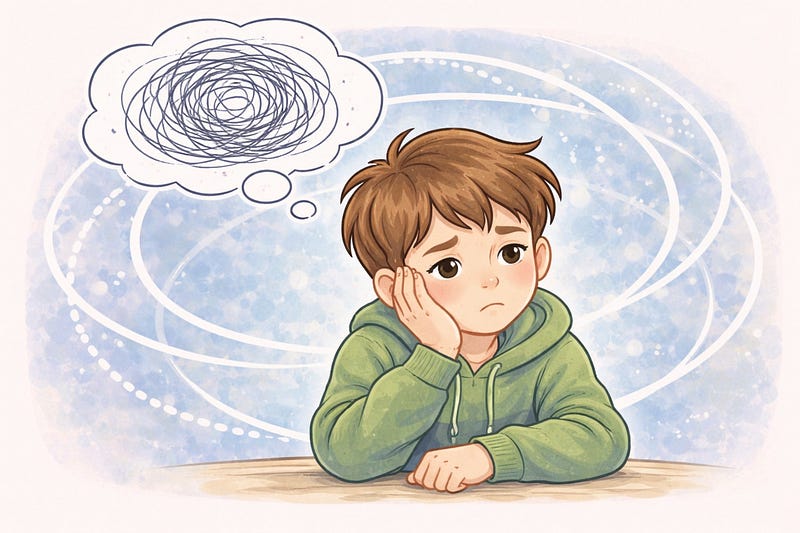
Think about the last time something embarrassing or upsetting happened to you.
Did you forget about it?
Or did your brain keep replaying it at 2 AM, in the shower, while you were trying to focus on something else?
That’s the brain trying to process.
It’s doing exactly what it’s supposed to do: reviewing the experience, looking for meaning, trying to make sense of what happened so it can file it away.
But if we keep shutting that process down, if we keep saying “don’t think about it” then the brain gets stuck in a loop.
The experience doesn’t get integrated. It stays raw, unprocessed, emotionally charged.
And then it shows up as:
- Avoidance (“I’m never going back to that class”)
- Anxiety (the fear gets bigger instead of smaller)
- Shame (they internalize it as “I’m bad” instead of “I made a mistake”)
- Emotional flooding (small triggers cause big reactions)
Here’s what neuroscience shows:
The brain integrates difficult experiences by creating a coherent narrative.
When we help children TELL THE STORY of what happened, when we rewind, replay, and reflect then we’re helping their upstairs brain (logic, perspective, understanding) work together with their downstairs brain (emotion, memory, fear).
That’s integration.
And integration is what allows them to move forward instead of getting stuck.
· · ·
The Indian Cultural Pattern: “Forget It and Move On”
Let’s be honest about what many of us learned growing up:
Don’t dwell on negative things. Don’t talk about what went wrong. Don’t bring up painful memories. Just move forward. Be strong. Forget about it.
We were taught that revisiting difficult moments is:
- Self-indulgent
- Weak
- Dwelling
- Making it worse
And many of us carry that into our parenting.
When our child is upset about something that happened, we say:
- “It’s over now. Don’t think about it.”
- “Why are you still talking about this? Let it go.”
- “You’re just making yourself more upset by thinking about it.”
We’re not being cruel. We’re trying to protect them from pain.
But here’s what we’re actually doing:
We’re teaching them that difficult feelings should be buried, not processed.
And when feelings get buried instead of processed, they don’t go away.
They go underground. They get bigger. They leak out in other ways.
The child who was excluded at school becomes anxious about social situations. The child who made a mistake in class develops a fear of failure. The child who was scolded by a teacher starts shutting down emotionally.
Not because the original experience was so terrible.
But because they never got to process it.
· · ·
The “Remote of the Mind”: Rewind, Replay, Reframe
This strategy is called “Use the Remote of the Mind” because it’s like having a remote control for your brain’s memories.
You can:
- Pause (stop when the memory gets overwhelming)
- Rewind (go back to the beginning and replay what happened)
- Fast-forward (skip past the hardest part if needed)
- Replay (watch it again with new understanding or perspective)
The goal isn’t to relive the trauma.
The goal is to help the brain create a coherent story, the one that makes sense, that has a beginning-middle-end, that can be filed away as “something that happened” instead of staying stuck as “something that’s still happening.”
Here’s what this looks like in practice:
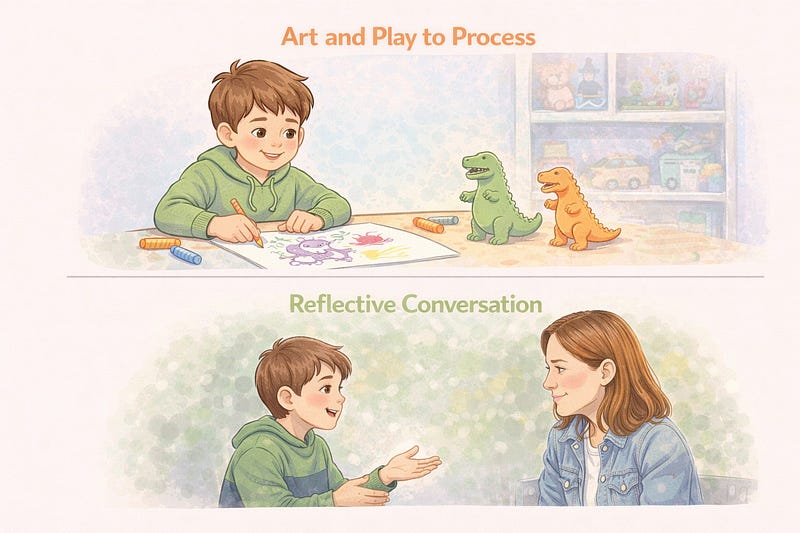
For Younger Children (Ages 6–11): Make It a Story
Young children process best through storytelling, play, and creativity.
Scenario: Your 8-year-old was scared during a thunderstorm. Days later, they’re still anxious whenever clouds appear.
What NOT to do: “There’s nothing to be scared of. Just forget about it.”
What TO do (Remote of the Mind): “Let’s talk about that storm. What happened first? Where were you when you heard the thunder? What did it feel like in your body? Then what happened?”
You’re helping them REWIND and REPLAY, putting the experience into a story with a beginning, middle, and END.
Then you can REFRAME: “So the thunder was really loud and surprising. Your body felt scared because it didn’t know what was happening. But then what happened? You were safe. The thunder passed. And now you know that thunder is loud, but it can’t hurt you.”
Other ways to do this with younger kids:
- Draw it: “Can you draw what happened? Show me the storm. Show me where you were. Show me what happened next.”
- Play it out: Use toys or stuffed animals to act out the experience. Let them control the narrative.
- Create a book: Make a simple picture book together about “The Day of the Big Storm” with a clear ending where they’re safe.
The key is: You’re not dismissing the experience. You’re helping them organize it into a story their brain can file away.
· · ·
For Older Kids and Teens (Ages 12–17): Reflect and Reframe
Older kids can process through conversation and reflection, but they need you to create space and not force it.
Scenario: Your 14-year-old was humiliated in front of their class. They keep replaying it, and now they don’t want to go to school.
What NOT to do: “Everyone will forget about it by tomorrow. Stop being so dramatic.”
What TO do (Remote of the Mind): “I can see that moment is still bothering you. Do you want to talk about what happened? Let’s rewind. What was happening right before? Then what happened? And how did it end?”
You’re helping them REPLAY the experience with you as a witness.
Then you can help them REFRAME: “So in that moment, you felt humiliated. That makes total sense. But let’s think about this: What do you think the other kids were actually thinking? How long do you think they’ll remember it? And what would you want to do differently if something like this happens again?”
Other ways to do this with teens:
- Journal it: “Sometimes writing out exactly what happened: like a play-by-play can help your brain process it. Want to try that?”
- Perspective shift: “If your best friend experienced this, what would you tell them?”
- Future projection: “Fast-forward one year. When you look back at this moment, what will you see?”
The key is: You’re not minimizing their experience. You’re helping them see it from multiple angles so it doesn’t stay stuck in one painful perspective.
· · ·
A Story from Camp: The Rewind That Healed
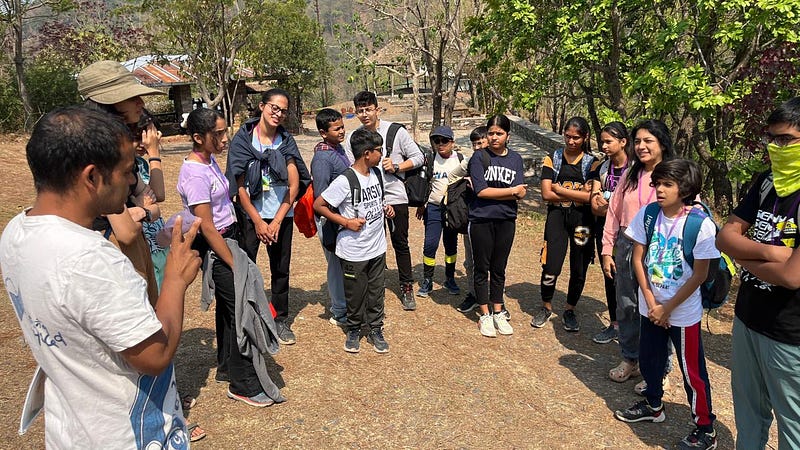
During one of our camps, a 12-year-old girl let’s call her Meera, had a conflict with another camper on the second day.
The other girl said something cutting during a group activity. Meera felt embarrassed in front of everyone. She withdrew. Stopped participating. Kept to herself.
One of the facilitators noticed and pulled her aside later that evening.
Not to tell her to “get over it” or “forget about it.”
But to help her rewind.
“Do you want to talk about what happened earlier? I noticed you seemed upset.”
Meera hesitated. Then nodded.
“Okay. Let’s go back to the beginning. What were you doing right before she said that?”
Meera started talking. Slowly at first. Then faster. She replayed the whole scene, what she said, what the other girl said, how everyone reacted, how she felt.
The facilitator just listened. Witnessed. Let her tell the story.
Then gently asked: “What do you think she was feeling when she said that?”
Pause.
“I don’t know. Maybe… she was frustrated with the activity?”
“Maybe. Do you think she was actually trying to hurt you? Or was she just reacting?”
Another pause.
“I think she was just frustrated.”
That was the reframe.
Not forced. Not told. But discovered through the process of replaying with someone who could hold space.
The facilitator then asked: “If you could rewind and do that moment again, what would you do differently?”
Meera thought. “I think I would have said something back. Like, ‘That hurt.’ Instead of just shutting down.”
“That’s really powerful. So what if you try that now? What if you tell her that hurt and not to attack her, but just to let her know?”
The next day, Meera did. She approached the other girl and said, simply: “Yesterday when you said that, it hurt my feelings.”
The other girl’s face softened immediately. “Oh my god, I’m so sorry. I didn’t mean it like that. I was just frustrated.”
They talked. They hugged. They moved on.
Here’s what happened in that process:
Meera’s brain got to integrate the experience.
She replayed it (rewind). She examined it from different angles (reflect). She imagined a different outcome (reframe). She took action based on the new understanding (resolution).
If the facilitator had said “just forget about it” or “don’t let it bother you,” Meera would have stayed stuck. The shame and hurt would have stayed raw. She might have avoided the other girl or worse, internalized it as “I’m not likable.”
But because someone helped her USE THE REMOTE OF THE MIND, she integrated the experience.
And she learned something powerful: Difficult moments can be revisited, understood, and resolved.
· · ·
The Shame Piece: “What Will People Think?”
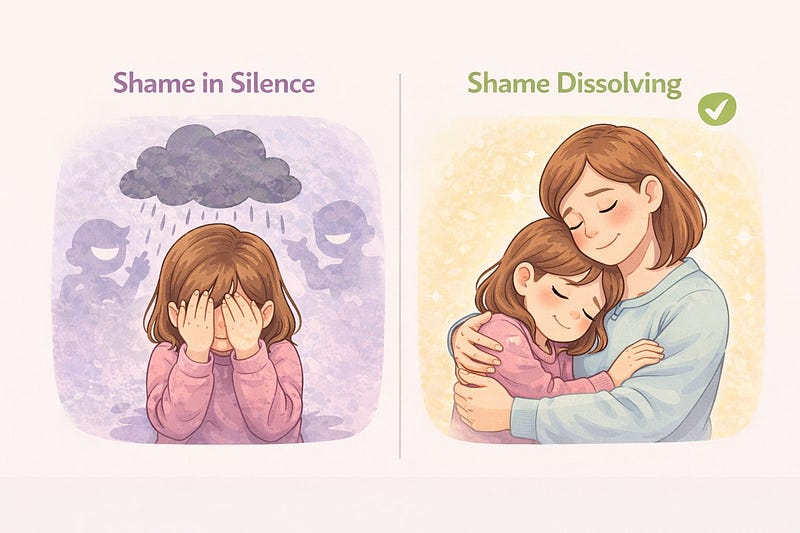
We need to talk about shame.
Because in Indian culture (and many cultures), shame is THE emotion we’re taught to avoid at all costs.
“What will people think?” “Don’t embarrass the family.” “Keep it to yourself.”
And when children make mistakes or have difficult experiences, our instinct is to shut it down quickly, so they don’t dwell, so they don’t feel more shame, so they can “move past it.”
But here’s the problem:
Shame thrives in silence. And it dissolves in witnessing.
When a child feels shame about something that happened, when they made a mistake, said something wrong, were excluded, or failed then their brain is telling them: “You’re bad. You’re unworthy. Everyone saw. Everyone knows.”
If we respond with:
“Don’t think about it” → They think: I shouldn’t talk about this. It must be too bad to even discuss.
“Why did you do that?” → They think: There’s something wrong with me.
“Just forget it happened” → They think: I need to bury this. I need to hide.
The shame gets bigger.
But if we respond with the Remote of the Mind, if we help them REWIND, REPLAY, and REFRAME we’re doing something revolutionary:
We’re showing them that mistakes and difficult experiences can be looked at, talked about, and understood without being consumed by shame.
Here’s what that sounds like:
Child: “I said something really stupid in class today. Everyone laughed at me. I never want to go back.”
Parent (not using Remote): “It’s fine. No one will remember by tomorrow. Don’t worry about it.” Result: Child internalizes shame, avoids participation next time.
Parent (using Remote): “That sounds really hard. Do you want to tell me what happened? Let’s rewind. What were you trying to say?” Child tells the story. “Okay. So you misspoke, and people laughed. That must have felt awful in that moment. What do you think people were actually laughing at? you as a person, or just the mistake?” Child reflects: “I guess… just the mistake.” “Right. And have you ever laughed when someone else misspoke?” Child: “Yeah, I guess.” “So mistakes happen. They’re not WHO you are. They’re just moments. What would you want to do differently next time?”
Result: Child learns that mistakes are survivable, shame can be processed, and they can move forward without avoiding.
· · ·
This Works for Big AND Small Things
One important clarification:
The Remote of the Mind isn’t just for major trauma.
It works for:
- Big, scary experiences (accidents, medical procedures, frightening events)
- Social difficulties (exclusion, conflict, embarrassment)
- Everyday upsets (bad day at school, frustrating moment, disappointing outcome)
ANY experience that your child’s brain is replaying over and over needs integration.
If they keep bringing it up, keep thinking about it, keep reacting to reminders of it, that’s a sign their brain is trying to process.
Don’t shut that down with “forget about it.”
Help them rewind, replay, and reframe so their brain can finally file it away.
· · ·
How to Know When to Use This Strategy
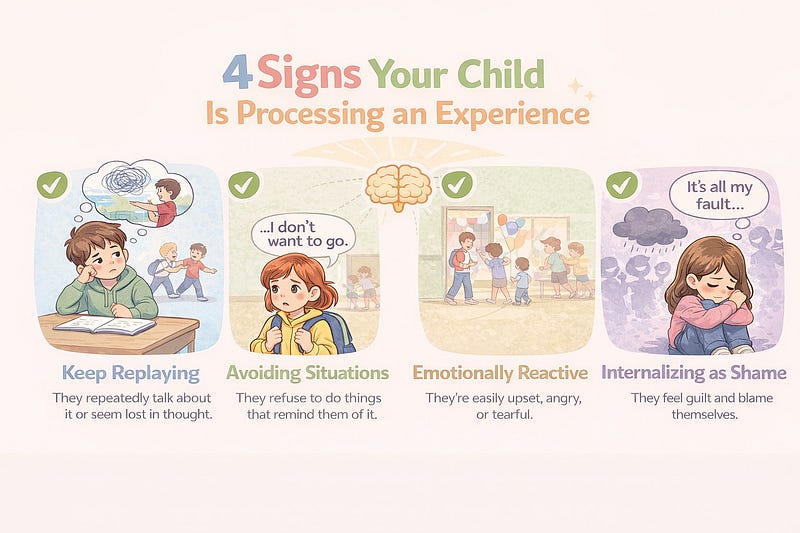
Here are the signs your child needs to use the Remote of the Mind:
They keep replaying the experience:
- Talking about it repeatedly
- Bringing it up in unrelated contexts
- Showing physical signs of distress when reminded of it
They’re avoiding related situations:
- “I don’t want to go to school” after a bad day
- “I’m never playing with them again” after a conflict
- “I can’t do that” after a failure
They’re emotionally reactive about it:
- Small reminders trigger big emotions
- They get defensive or shut down when it’s mentioned
- They seem “stuck” in the feeling
They’re internalizing it as shame:
- “I’m so stupid”
- “Everyone hates me”
- “I can’t do anything right”
These are all signs the brain hasn’t integrated the experience yet.
Time to rewind, replay, and reframe.
· · ·
What This Looks Like at Young SoulTales
Processing difficult experiences is woven into everything we do.
We don’t just create positive, happy moments and pretend hard things don’t happen.
We create spaces where:
- Conflicts can be talked about, not swept under the rug
- Mistakes can be reflected on, not buried in shame
- Difficult emotions can be witnessed, not dismissed
After a challenging activity or a tough group moment, we don’t say “forget about it, let’s move on.”
We say: “Let’s talk about what happened. What did you notice? What was hard? What did you learn?”
We help kids REPLAY the experience with the support of facilitators and peers who can witness without judgment.
Because we know:
You can’t integrate what you won’t revisit.
The children who leave our camps aren’t the ones who had perfect, easy experiences.
They’re the ones who learned that difficult moments can be looked at, understood, and moved through, without shame, without avoidance, without getting stuck.
· · ·
This Works for Us Too
One last thing:
We, as adults, also carry unprocessed experiences.
Moments we were told to “forget about.” Mistakes we buried instead of examining. Shame we learned to hide instead of heal.
If you find yourself replaying something from your past, if there’s a memory that still feels raw, still triggers you, still makes you cringe then your brain is still trying to process it.
You can use the Remote of the Mind too.
Rewind. What actually happened? Replay. What was going on for you in that moment? Reframe. What understanding can you bring now that you couldn’t then?
You deserve integration too.
· · ·
What’s Next
In the next post, we’ll move into the second half of the book: Building the “Memory” Brain. We’ll explore Strategy #7: Increase the Family Fun Factor and discover why positive shared experiences are essential for emotional resilience and connection.
If you’re following this series on WhatsApp, you’ll get it directly on Tuesday.
👉 Join the Young SoulTales Parent’s Circle—We share these strategies, real stories from our camps, and tools for helping children process and integrate their experiences.
· · ·
Preeti Toraskar is the founder of Young SoulTales, offering experiential programs that help children develop emotional literacy through psychology-based approaches. She is currently completing her Master’s in Expressive Movement Therapy and has trained with Dr. Daniel Siegel in Putting Personalities into Practices. Her work is grounded in the belief that difficult experiences need to be witnessed and processed and not buried and forgotten.
· · ·
← Previous: Strategy #5—Move It or Lose It: Why Your Child Can’t Calm Down Sitting Still → Next: Strategy #7—Increase the Family Fun Factor (Coming Tuesday)
