
Whole-Brain Strategy #4: Use It or Lose It
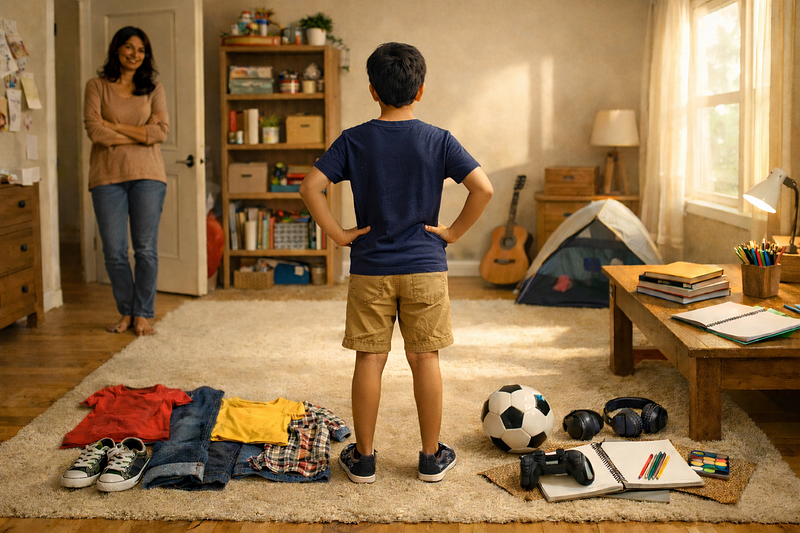
The scene unfolds exactly as you’d expect:
You’re running late. Your 8-year-old is still deciding what to wear. You watch them pull out three different shirts, compare them, put them back.
Every cell in your body wants to say, “Just wear the blue one. We need to leave NOW.”
Or maybe it’s your teenager, paralyzed over which optional subject to choose. They’ve been discussing it for weeks, making pros-and-cons lists, changing their mind daily.
You know exactly what they should pick. You can see the logical answer so clearly. Why can’t they just DECIDE?
Here is what’s happening in those moments,
Your child’s upstairs brain is the part responsible for decision-making, problem-solving, and emotional regulation, is trying to exercise itself.
And we are about to shut down the gym.
· · ·
The Neural Truth: What You Don’t Use, You Lose
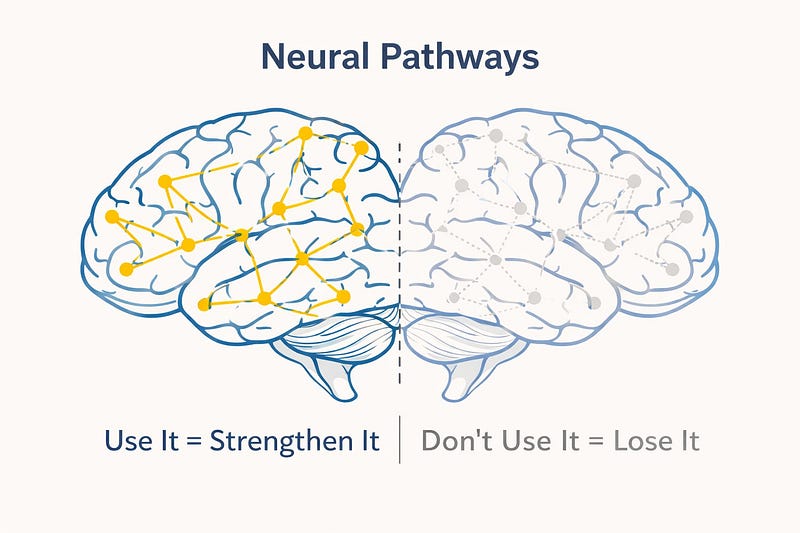
In our last post, we talked about the upstairs and downstairs brain and how the upstairs brain (the thinking, decision-making part) doesn’t fully develop until the mid twenties.
But here is what we didn’t talk about: How does that upstairs brain actually develop?
Not through lectures. Not through instructions. Not through us making decisions FOR them.
It develops through USE.
Every time your child:
- Makes a decision (even a small one)
- Solves a problem on their own
- Manages their emotions without you stepping in
- Thinks through consequences before acting
- Plans, reflects, or considers someone else’s perspective
… they’re building neural pathways in their upstairs brain.
And every time WE do those things for them, every time we make the decision, solve the problem, swoop in to prevent the meltdown, or tell them exactly what to do when those neural pathways don’t get built.
Use it or lose it.
This is not a metaphor. This is literal neuroscience.
The brain is constantly deciding which connections to strengthen and which to prune away. The pathways that get used become highways. The ones that don’t, They fade.
If your child never practices making decisions, their brain won’t develop strong decision-making capacity.
If they never practice emotional regulation, that skill won’t be there when they need it.
We can’t outsource brain development.
· · ·
The Indian Parenting Pattern: We Do Everything for Them
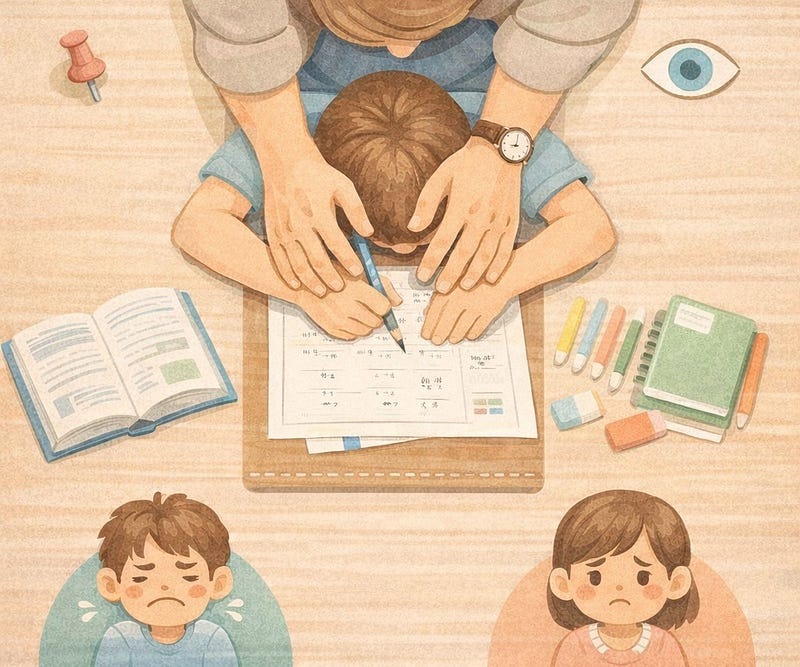
Let’s be honest about what’s happening in many Indian households, particularly in educated, well-meaning families:
We choose their school. We choose their subjects. We choose their extracurriculars. We manage their homework. We intervene in their friendships. We solve their conflicts. We pack their bags. We plan their day. We decide what they’ll eat, wear, study, and become.
And we do it with love.
We tell ourselves: “I am just helping them avoid mistakes.” “They are too young to know what’s best.” “I have more experience.” “If I don’t step in, they will mess it up.”
But here’s the uncomfortable truth:
When we do everything for our children, we are not protecting them. We are disabling them.
We are preventing their upstairs brain from getting the exercise it desperately needs.
And then, when they turn 18 or 20 or 25, we wonder why they:
- Can’t make decisions without calling us five times
- Fall apart when things don’t go as planned
- Struggle with basic problem-solving
- Need constant validation and guidance
- Can’t handle failure or disappointment
We didn’t raise weak children.
We raised children whose brains never got to practice being strong.
· · ·
What “Use It or Lose It” Actually Looks Like
This strategy isn’t about throwing your child into the deep end and hoping they swim.
It’s about creating safe opportunities for them to exercise their upstairs brain with appropriate support based on their age and development.
Here’s what it looks like across different ages:
· · ·
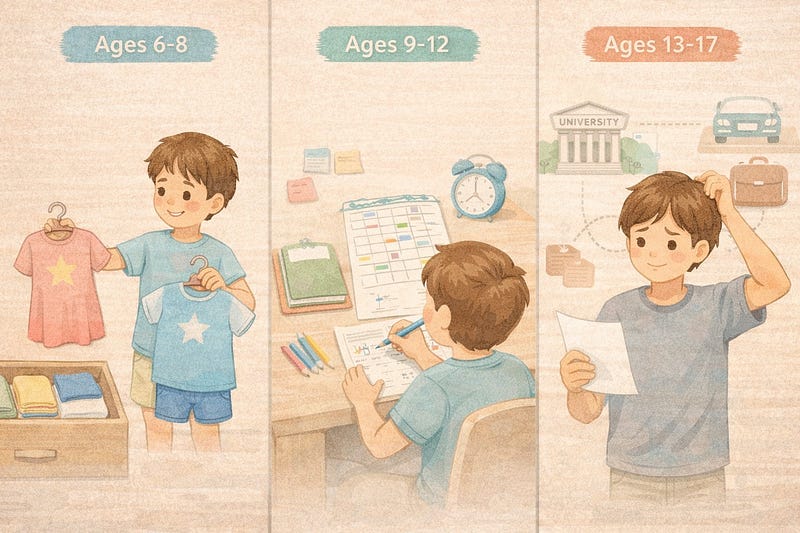
Ages 6–8: Building the Foundation
At this age, the upstairs brain is just beginning to develop executive function skills. The practice opportunities are small but crucial:
Decision-making:
- Let them choose their clothes (even if the colors clash)
- Let them decide which game to play with friends
- Ask them: “Do you want to finish homework before or after snack?”
Problem-solving:
- “Your toy is stuck under the couch. What could we try?”
- “You and your sister both want the same book. How can we solve this?”
Emotional regulation:
- Instead of immediately comforting: “I can see you’re upset. What do you think would help you feel better?”
These feel like tiny, insignificant moments.
They are not.
They are the foundational reps that build the neural pathways for everything that comes later.
· · ·
Ages 9–12: Expanding Autonomy
At this stage, the upstairs brain can handle more complexity. Kids can think ahead, consider multiple perspectives, and start managing their own lives in small ways.
Decision-making:
- Let them plan their weekend schedule
- Let them manage their homework routine (and experience the consequences if they don’t)
- Ask them: “What do you think is the best way to approach this situation?”
Problem-solving:
- “You’re struggling with this math concept. What are three different ways you could get help?”
- “Your friends are leaving you out. What are your options here?”
Emotional regulation:
- “I can see you are really frustrated right now. What strategies have worked for you before?”
This is also the age where failure becomes a teacher.
Let them forget their water bottle. Let them realize they should have started the project earlier. Let them feel the natural consequences of poor planning.
Not with an “I told you so.”
With compassionate reflection: “That was hard, wasn’t it? What would you do differently next time?”
· · ·
Ages 13–17: High-Stakes Practice
By adolescence, the upstairs brain is capable of abstract thinking, long-term planning, and complex decision-making, but it still needs practice.
This is also when the stakes feel higher for parents. Academic pressure. Peer pressure. Life-altering decisions about streams and careers.
The temptation to take over is INTENSE.
But this is exactly when they need to practice most.
Decision-making:
- Let them choose their subjects (even if you disagree)
- Let them decide how to spend their pocket money
- Ask them: “What do you want your next year to look like? What would you need to do to make that happen?”
Problem-solving:
- “You are overwhelmed with everything on your plate. What can you delegate, delay, or drop?”
- “This friendship is draining you. What boundaries do you need?”
Emotional regulation:
- “I can see you’re spiraling. What do you need right now, space, distraction, or someone to talk to?”
Teenagers don’t need us to solve their problems.
They need us to believe they CAN solve their problems, and give them space to try.
· · ·
A Story from Camp: The Accommodation Fight
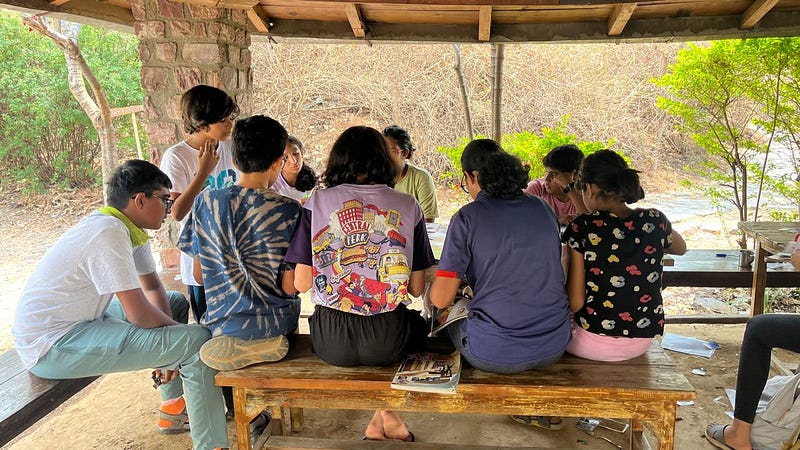
During one of our camps, we had 12 kids (ages 11–14) who needed to figure out room arrangements for a seven day retreat.
The facilitators set up the accommodations: three rooms, four beds per room. The only rule? Everyone needed a bed. How they divided themselves was up to them.
What followed was… chaos.
Some kids wanted to room with their friends. Others wanted to avoid certain people. Some cared about which room had the best view. Others just wanted to sleep near the bathroom.
Arguments erupted. Alliances formed. Feelings got hurt.
One facilitator later told me: “Every instinct in my body wanted to just assign the rooms. It would have taken 30 seconds. But I knew, this was the work.”
So instead, the facilitators said just one thing:
“Think about the pros and cons. What matters most to you? What are you willing to compromise on? How can everyone feel okay with the outcome?”
And then they stepped back.
It took two hours.
There were tears. There were accusations of unfairness. There were kids who walked away in frustration and had to be coaxed back.
But eventually, they figured it out.
Not perfectly. Not without mess. But they figured it out.
And here is what they practiced in those two hours:
- Negotiation (How do we balance what I want with what you want?)
- Perspective-taking (Why does this matter so much to them?)
- Emotional regulation (I am angry, but I need to stay calm enough to solve this)
- Problem-solving (What creative solutions can we try?)
- Decision-making (What am I willing to give up to get what I really want?)
Those are upstairs brain skills.
And they don’t develop in a lecture or a workbook.
They develop in the struggle.
· · ·
The Hardest Part: Watching Them Struggle
Let’s name what makes this strategy so difficult:
Watching your child struggle is painful.
You see them frustrated. Confused. Making the “wrong” choice. About to fail.
And every parental instinct screams: HELP THEM… FIX IT… SAVE THEM…
But here is the question we need to ask ourselves:
Am I helping them? Or am I robbing them of the chance to build the skill they need?
There’s a difference between support and takeover.
Support looks like:
- “This seems hard. What have you tried so far?”
- “I am here if you need to brainstorm, but I trust you to figure this out.”
- “That didn’t work the way you hoped. What did you learn?”
Takeover looks like:
- “Here, let me do it.”
- “You should have done it this way.”
- “I told you this would happen.”
Support strengthens the upstairs brain.
Takeover weakens it.
· · ·
Failure is Not the Enemy

This is where we need to talk about failure, because it’s the elephant in the room.
Indian parenting culture is deeply uncomfortable with failure. We see it as something to avoid at all costs. We buffer our children from every possible disappointment.
But here is what neuroscience shows:
Failure is one of the most powerful ways the upstairs brain learns.
When a child tries something, fails, reflects, and tries again then their brain is literally rewiring itself. They’re building:
- Resilience (I can handle setbacks)
- Grit (I can keep going even when it’s hard)
- Problem-solving (What went wrong? What can I change?)
- Emotional regulation (I’m disappointed, but I’m okay)
But if we never let them fail, they never build these capacities.
And then we send them out into a world that WILL let them fail, except now they have no internal resources to handle it.
The goal isn’t to set our children up to fail.
The goal is to let them experience small, manageable failures in safe environments while we are still there to help them process and learn.
The accommodation fight at camp? Some kids didn’t get their first choice of room.
That’s a small failure. A disappointment. A compromise.
But it’s also a lesson: Life doesn’t always give you what you want, but you can still make it work.
That’s an upstairs brain skill they’ll use for the rest of their lives.
· · ·
This Doesn’t Mean We’ve Already Failed Them
If you’re reading this and thinking: “Oh god, I’ve been doing everything for my child. Have I already disabled their brain?”
Take a breath.
It’s not too late.
Neural plasticity is the brain’s ability to rewire itself which continues throughout life. Your child’s upstairs brain can still develop these skills, even if they haven’t had much practice yet.
But it requires a shift.
Starting today, look for small opportunities to hand decisions back to your child:
- “What do you think we should do?”
- “How would you solve this?”
- “What’s your plan?”
It will feel uncomfortable. For both of you.
They might resist: “I don’t know! You decide!”
That’s because they are not used to exercising that muscle. It feels hard.
But that’s exactly why they need to do it.
Start small. Be patient. Celebrate their efforts (not just outcomes).
And watch their confidence grow.
· · ·
What This Looks Like at Young SoulTales
People often ask me: “What exactly happens at your camps that’s so different?”
This. This is a big part of it.
We don’t run our camps like a schedule of prescribed activities where kids are told what to do and when.
We create experiences where kids have to:
- Make choices
- Solve problems together
- Navigate conflicts
- Manage their emotions
- Reflect on their decisions
And we, as facilitators, practice the hardest skill of all: stepping back.
Not abandoning them. But giving them space to struggle, to fail, to figure it out.
Because we know: that struggle is where the growth happens.
That’s where the upstairs brain gets built.
We are not there to prevent discomfort. We are there to create a safe container where discomfort becomes a teacher.
· · ·
The Long View (Again)
Here’s the truth we need to keep coming back to:
Parenting is not about preventing struggle. It’s about preparing our children to handle struggle.
We won’t always be there. They will face decisions, problems, failures, and disappointments without us.
The question is: Will their brains be strong enough to navigate those moments?
Or will they fall apart because they never got to practice?
Every decision you let them make, even the small ones, even the “wrong” ones, is building that capacity.
Every problem you let them solve, even if it takes longer, even if they struggle, is strengthening that neural pathway.
Use it or lose it.
Their upstairs brain is waiting.
Give it the workout it needs.
· · ·
This Works for Us Too
One more thing:
We, as adults, also need to exercise our upstairs brains.
How often do we:
- Make reactive decisions instead of thoughtful ones?
- Avoid difficult problems because we don’t want to deal with them?
- Let our emotions hijack our thinking?
- Blame circumstances instead of problem-solving?
If we want to raise children with strong upstairs brains, we need to model it.
Make decisions deliberately. Think through problems. Regulate your emotions. Reflect on your choices.
Show them what a well-exercised upstairs brain looks like.
· · ·
What’s Next
In the next post, we’ll explore Strategy #5: Move It or Lose It, where we discover why physical movement is essential for emotional regulation and brain integration (not just for fitness).
If you’re following this series on WhatsApp, you’ll get it directly on Tuesday.
👉 Join the Young SoulTales Parent’s Circle We share these strategies, real stories from our camps, and practical tools for raising emotionally intelligent children.
· · ·
Preeti Toraskar is the founder of Young SoulTales, offering experiential programs that help children develop emotional literacy through psychology-based approaches. She is currently completing her Master’s in Expressive Movement Therapy and has trained with Dr. Daniel Siegel in developmental psychology. Her work is grounded in the belief that children don’t need protection from struggle, they need safe spaces to practice being strong.
· · ·
Strategy #3—Engage, Don’t Enrage: Understanding the Upstairs-Downstairs Brain → Next: Strategy #5—Move It or Lose It (Coming Tuesday)
